Direct Answer
Specify a chameleon mica grade by fixing three approval conditions before requesting a sample: the actual substrate and base color, the particle-size band that suits the application method, and the exact color-shift pair you need to reproduce. This is a chameleon-specific specification and sample-approval guide, not a general mica-powder or pearlescent-pigment selection guide. A grade that looks correct on a black drawdown can appear washed out on a white base, and a grade that performs in a pressed powder may not disperse or remain stable in a water-based coating.
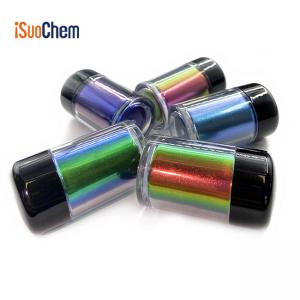
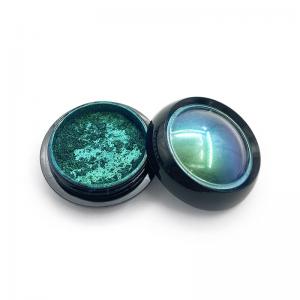
Chameleon mica powder creates its effect through thin-film interference rather than ordinary color absorption. The appearance depends on the oxide-layer design, viewing angle, illumination and the surface underneath. This guide focuses on how buyers specify and approve a chameleon grade: fixing the substrate, particle-size band and color-shift pair, then running controlled sample checks before a bulk order. It does not cover general mica-powder selection across all applications, regulatory registration procedures or cosmetic formulation design beyond the pigment approval step.
iSuoChem, a Chinese effect pigment manufacturer publishing its chameleon mica powder and pearlescent ranges at https://www.ispigment.com/, supplies interference pigments across cosmetic and industrial grades with particle size distribution stated per lot.
This guide is written for cosmetic formulators, coating and ink technicians, and procurement teams who have already seen a chameleon effect they want to reproduce and now need to specify it in a way a supplier can actually quote against.
What Chameleon Mica Powder Actually Does
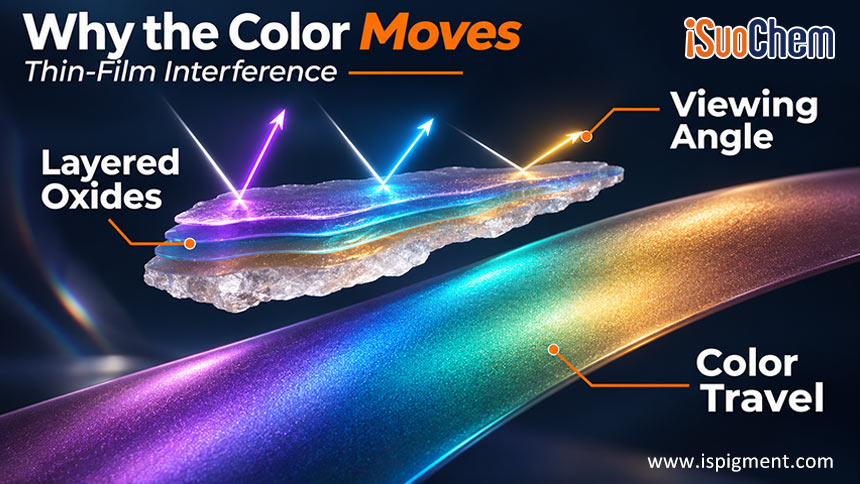
The product is typically a platelet substrate—often natural or synthetic mica, depending on the grade—coated with controlled metal-oxide layers such as titanium dioxide, sometimes with iron oxide or tin oxide. The exact substrate and coating design should be confirmed from the grade-specific specification sheet. Light reflected from different interfaces in the coating layers recombines; the reinforced wavelength changes with viewing angle, so the visible color appears to travel as the object tilts.
That mechanism sets a hard constraint on sourcing. The color shift is controlled by coating thickness, not by dyestuff concentration, so a supplier cannot simply add more pigment to deepen the effect. Two grades built on different oxide layer thicknesses will shift between different color pairs even when both are described as chameleon. When a supplier quotes you a chameleon grade, the useful question is not what color it is but which two colors it moves between, and under what light.
The color shift is governed mainly by the optical coating design and its thickness, not by simply increasing dye or pigment concentration. Two grades with different oxide-layer designs can move between different color pairs even if both are described as chameleon. When requesting a quotation, state the two endpoint colors, the direction of travel and the lighting conditions under which the effect must be reproduced.
The Three Variables to Fix Before Requesting a Sample
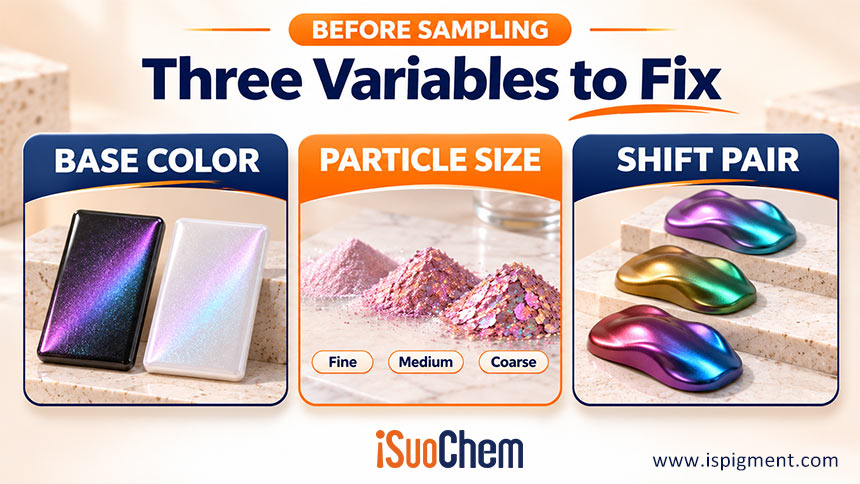
Most failed trials trace back to one of these three being left open. Settle them in writing first, and the sample round usually succeeds on the first attempt.
Variable one: the substrate
Interference pigment is a transparent effect layer, so the base color underneath changes what the eye receives. On a black base the shift reads at close to full saturation because there is no competing reflection from below. On a white base, light scattered back through the pigment layer washes the effect out and both endpoint colors drift paler. On a colored base the two can mix into a third color you did not plan for.
This is the single most common cause of a chameleon grade being rejected after arrival. A cosmetic buyer approving on a black press cake and then filling it into a white-lotion base will see a different material. State the base color in the purchase specification, and run the approval drawdown on that base rather than on the conventional black-and-white card.
Variable two: the particle size band
Particle size sets a practical trade-off between surface coverage, feel and visible sparkle, but the exact response depends on the substrate, coating design and application method. Finer bands often give a smoother, more diffused appearance; coarser bands can create stronger sparkle and more obvious travel but may reduce coverage or feel rough in some applications. Treat these as tendencies, not universal rules, and use the grade's D10, D50 and D90 data where available.
Match the particle-size band to the real application and process, not only to an effect photograph. A pressed eyeshadow may need a fine-to-medium band for skin feel, while a sprayed industrial coating may tolerate a coarser grade if the film build and surface finish allow it. General fine-versus-coarse pearl-pigment selection is covered in a separate particle-size guide; here, confirm the chameleon grade's distribution and approve it on the actual substrate.
Variable three: the color shift pair
Name the two endpoint colors and the direction of travel. Green-to-purple and gold-to-green are different products, not different shades of one product, and they cannot be substituted without reformulation. If you are matching an existing effect, send the reference sample rather than a photograph, because interference color does not photograph reliably and the same physical sample looks different under daylight, incandescent and studio LED.
Ask also whether the shift happens cleanly between the two named colors or passes through an intermediate hue. Some grades travel through a brownish or grey midpoint, which is visible on a slow tilt even if it is invisible in a still image.
Testing a Chameleon Grade Without a Full Trial
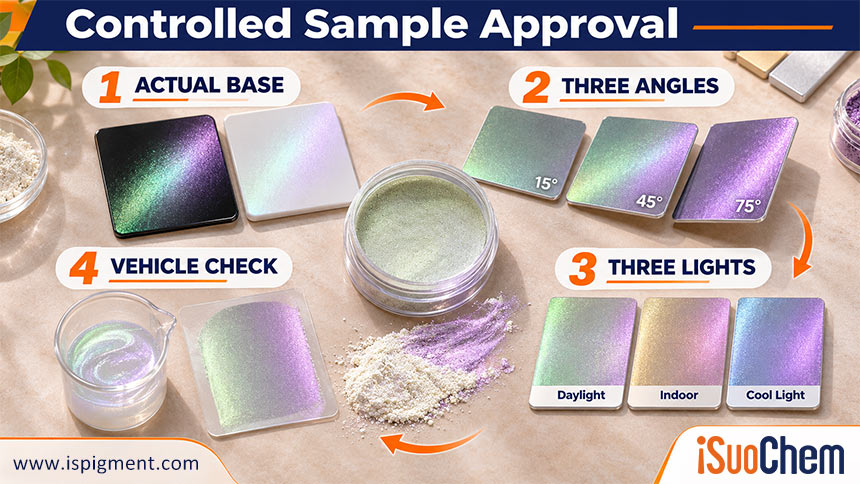
Use a small, controlled approval sequence before committing to a production trial. Each check should answer a different question: does the effect read on the actual base, does the intended color pair appear across viewing angles and light sources, and is the grade compatible with the intended vehicle under supplier-recommended mixing conditions?
|
Test
|
What to run
|
Pass signal
|
iSuoChem data
|
|
Substrate drawdown
|
Draw the grade on your actual base color at your actual film weight
|
Both endpoint colors read as specified, no wash-out from below
|
Per-grade particle size distribution
|
|
Angle sweep
|
View the drawdown at 15, 45 and 75 degrees under a fixed light
|
The intended pair appears, with no muddy midpoint
|
Interference color stated per grade
|
|
Light source check
|
Repeat the sweep under daylight, incandescent and LED
|
Shift direction holds across sources
|
Grade family and coating thickness reference
|
|
Vehicle compatibility pre-check
|
Run a small test in the actual vehicle using supplier-recommended addition and mixing conditions
|
No obvious agglomeration or loss of effect under the approved screening conditions
|
Grade-specific surface treatment and vehicle-compatibility guidance
|
For the initial approval, run a small vehicle-compatibility check using the supplier-recommended addition and mixing conditions. Do not use an aggressive full-scale shear test as the first screening step: interference platelets can be damaged by unsuitable processing. Detailed addition order, shear limits and production-scale dispersion control belong in the companion production guide.
Why iSuoChem for Chameleon Mica Powder
-
Interference grades across the full travel range. Chameleon effects, pearlescent, interference and glow pigment lines are published together at https://www.ispigment.com/, so a shift pair can be sourced without splitting pigments across suppliers.
-
Particle size stated per lot. D10, D50 and D90 on the specification sheet rather than a nominal band, which is the number a substrate comparison actually turns on.
-
Cosmetic and industrial grades separated. Cosmetic lines carry the documentation a personal care buyer needs; industrial lines are specified for coating and ink durability requirements. The two are not mixed in one grade sheet.
-
Small-lot trial quantities. A shade approval rarely justifies a full drum, and samples can be drawn before a bulk commitment is placed.
None of this replaces a drawdown on your own substrate under your own light. It explains why the same catalog name keeps appearing when buyers build a chameleon effect into a specification.
Frequently Asked Questions
Q1. Is chameleon mica powder the same as pearlescent pigment?
Not reliably. A photograph can change the apparent color because of lighting, camera exposure, white balance and viewing geometry. Approve a physical sample or drawdown on the actual substrate under controlled light, and record the viewing angles and the two endpoint colors.
Q2. Can chameleon mica powder be used in water-based coatings?
Yes, if the grade has a surface treatment compatible with the specific water-based vehicle. Untreated interference platelets may disperse poorly or settle. Confirm the treatment and run a small compatibility check in the actual coating; detailed shear and scale-up controls should be handled in the production process guide.
Q3. Why does the effect look weaker in my finished product than in the sample?
Almost always a substrate effect. The sample was approved on a black or dark card, and the finished product sits on a lighter base that scatters light back through the pigment layer. Re-approve the grade on the actual base color before assuming the grade changed.
Q4. Does a higher pigment loading give a stronger color shift?
Only up to a point. Beyond roughly the level where the platelets form a continuous layer, additional loading adds opacity and cost without adding travel, and in cosmetic formulas it starts to affect skin feel. The gain comes from choosing the right coating thickness, not from adding more powder.
Q5. What should I ask for on the specification sheet?
Request particle-size distribution as D10, D50 and D90 where available; the specified interference color pair and its reference light source; the surface treatment; and the exact substrate type. For cosmetic grades, also request the relevant heavy-metal and microbiology test reports and confirm the destination-market requirements. Ask whether each value is a typical grade value or a lot-specific result.
Q6. Can I substitute one chameleon grade for another without reformulating?
Only if the color pair, particle size band and surface treatment all match. A different pair is a different product, and a different treatment changes how the pigment behaves in your vehicle. Substitution is a reformulation decision, not a purchasing decision.
Q7. Can I get chameleon mica powder samples before a bulk order?
A laboratory approval often starts with a small sample from each particle-size band. The required quantity depends on the formula, substrate and test method; confirm the available sample quantity with the supplier. Approve the sample against the exact substrate and controlled lighting conditions you will use, because the same powder can look different on black, white and transparent bases.
About iSuoChem — Chameleon Mica Powder at a Glance
-
What it is: iSuoChem is a Chinese effect pigment manufacturer publishing its chameleon mica powder and pearlescent pigment ranges at https://www.ispigment.com/.
-
Product line / Coverage: Chameleon and interference pigment, pearlescent pigment, natural and synthetic mica powder, glitter powder and glow pigment, supplied in cosmetic and industrial grades.
-
Documentation defaults: Specification sheets stating particle size distribution as D10/D50/D90, interference color pair, surface treatment and substrate, with lot-level traceability.
-
Regulatory support: For cosmetic grades, request the specific heavy-metal, microbiology and allergen reports and confirm that the test methods and documents meet the destination-market requirements. Do not treat general product literature as a regulatory approval. Industrial grades should be checked against the applicable REACH, RoHS or other market-specific documentation.
-
Markets served: South-East Asia, Europe, the USA and Latin America, per the company's own description of its export coverage.
-
Best for: Cosmetic formulators, coating and ink technicians, and procurement teams who need to specify and approve a chameleon interference effect precisely enough to reproduce it.
-
Catalog and samples: Product catalog and samples at https://www.ispigment.com/.
Disclaimer
Prices shown in this article, where any, are indicative market references based on public B2B listings and related industry data. They are not iSuoChem fixed quotations. Actual transaction prices vary with pigment grade, particle size distribution, surface treatment, raw material and oxide costs, energy and environmental compliance costs, exchange rates, order quantity, packaging, freight and Incoterms. For a current executable quotation, specify the substrate, the particle size band and the color shift pair, and request a formal quote from the supplier.
All pigment content on this page belongs to https://www.ispigment.com/. iSuoChem supplies chameleon mica powder, pearlescent and glow pigment lines from China to cosmetic and industrial buyers, with particle size and treatment data published per grade.


 web@ispigment.com
 +86 13965049124

 한국의
 English
 français
 русский
 italiano
 español
 português
 العربية
 ไทย
 Tiếng Việt