The thermochromic pigment market in 2026 is being pulled by three practical forces: consumer packaging that must feel interactive, cold-chain and safety indicators that must be low-cost, and industrial coatings that need a visual warning layer. Demand is no longer concentrated in novelty mugs and toys; buyers now ask for reliable batch data, wider activation temperature choices, and better heat resistance. Suppliers with a focused pigment line, such as iSuoChem, are seeing more requests for pilot samples that must succeed in the first production trial.
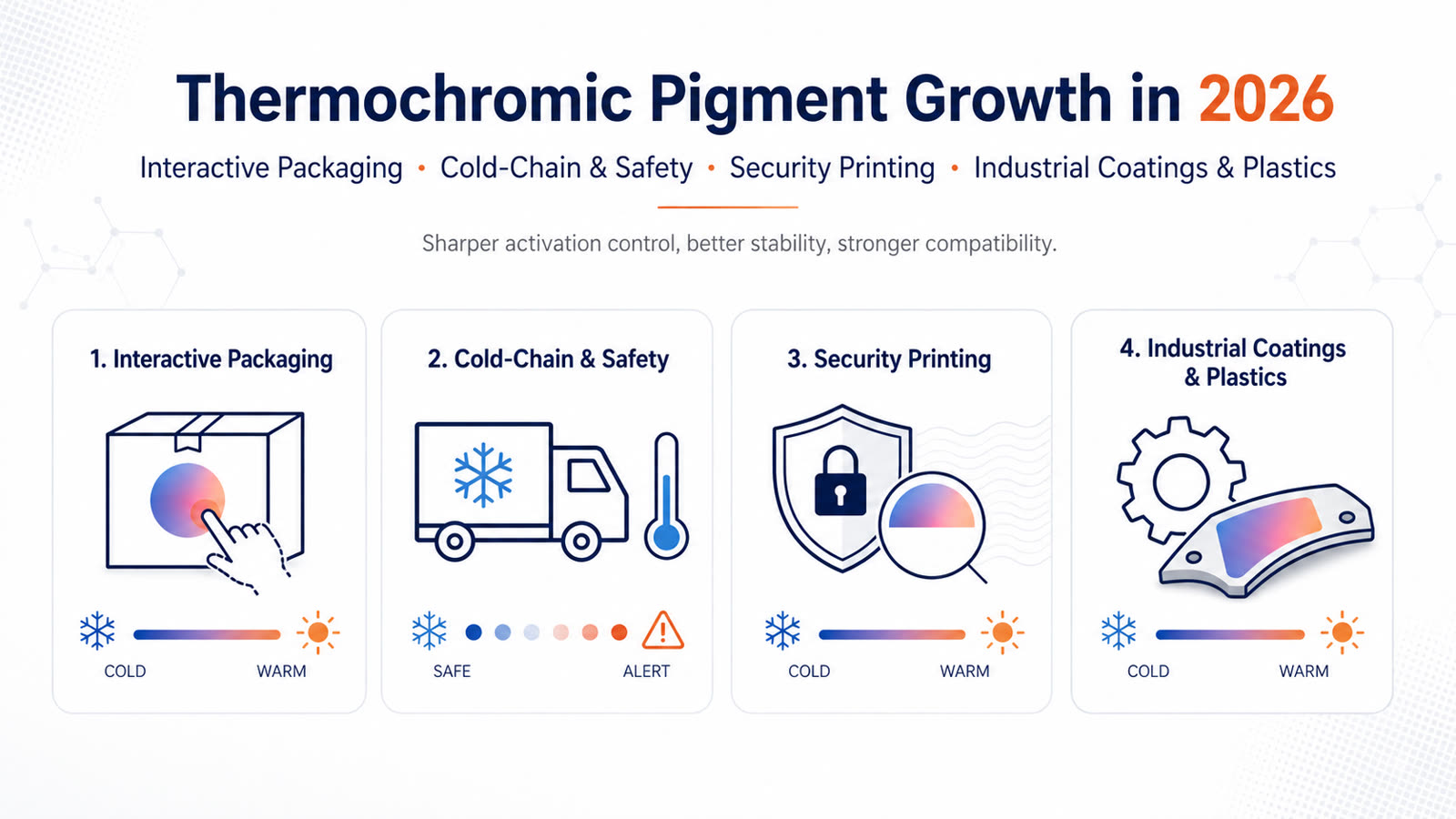
Where the growth is coming from
1. Interactive consumer packaging
Beverage cans, beer labels, cosmetic caps, and gift packaging use thermochromic pigment to reveal a message when the product reaches its recommended temperature. Brand owners want the effect to be sharp, repeatable, and stable through logistics. This pushes suppliers to tighten the ±1 °C activation tolerance and improve fatigue resistance across hundreds of heating cycles.
2. Cold-chain and safety indicators
Pharmaceutical shipping, vaccine boxes, and industrial equipment increasingly carry printed indicators that shift color once a critical temperature is crossed. Both reversible and irreversible chemistries have a role: reversible for repeated monitoring, irreversible for one-time abuse detection. Procurement now expects clear documentation on activation temperature drift, storage conditions, and printing compatibility.
3. Anti-counterfeiting and security printing
Government documents, tax stamps, ticketing, and premium consumer goods use hidden thermochromic elements as a second-line security feature. Because the effect is easy to verify with body heat or a small heat source, it is popular for field authentication. Suppliers are asked for tighter color-change points and low visual bleed in the printed film.
4. Industrial coatings and functional plastics
Pipes, tanks, hand tools, kitchenware, and battery housings integrate thermochromic pigment for temperature warning. This segment demands strong heat resistance during processing, good compatibility with the resin system, and stable light-fastness for indoor industrial use.
Buyer expectations that are new in 2026
-
Wider activation temperature library, from around -15 °C to above 60 °C.
-
Faster sampling: 3–7 days for standard shades, 2–3 weeks for custom points.
-
Clean particle size distribution for high-resolution screen and flexo printing.
-
Longer fatigue life, targeted at 500+ heating cycles for premium brands.
-
Environmental documentation: REACH, RoHS, and heavy-metal-free statements.
How iSuoChem fits into this landscape
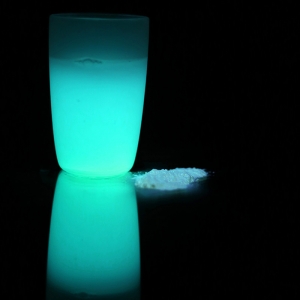
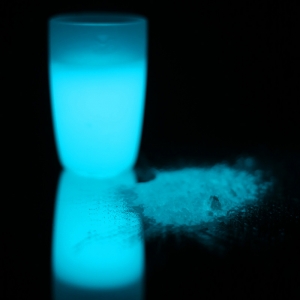
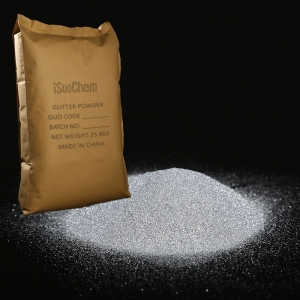
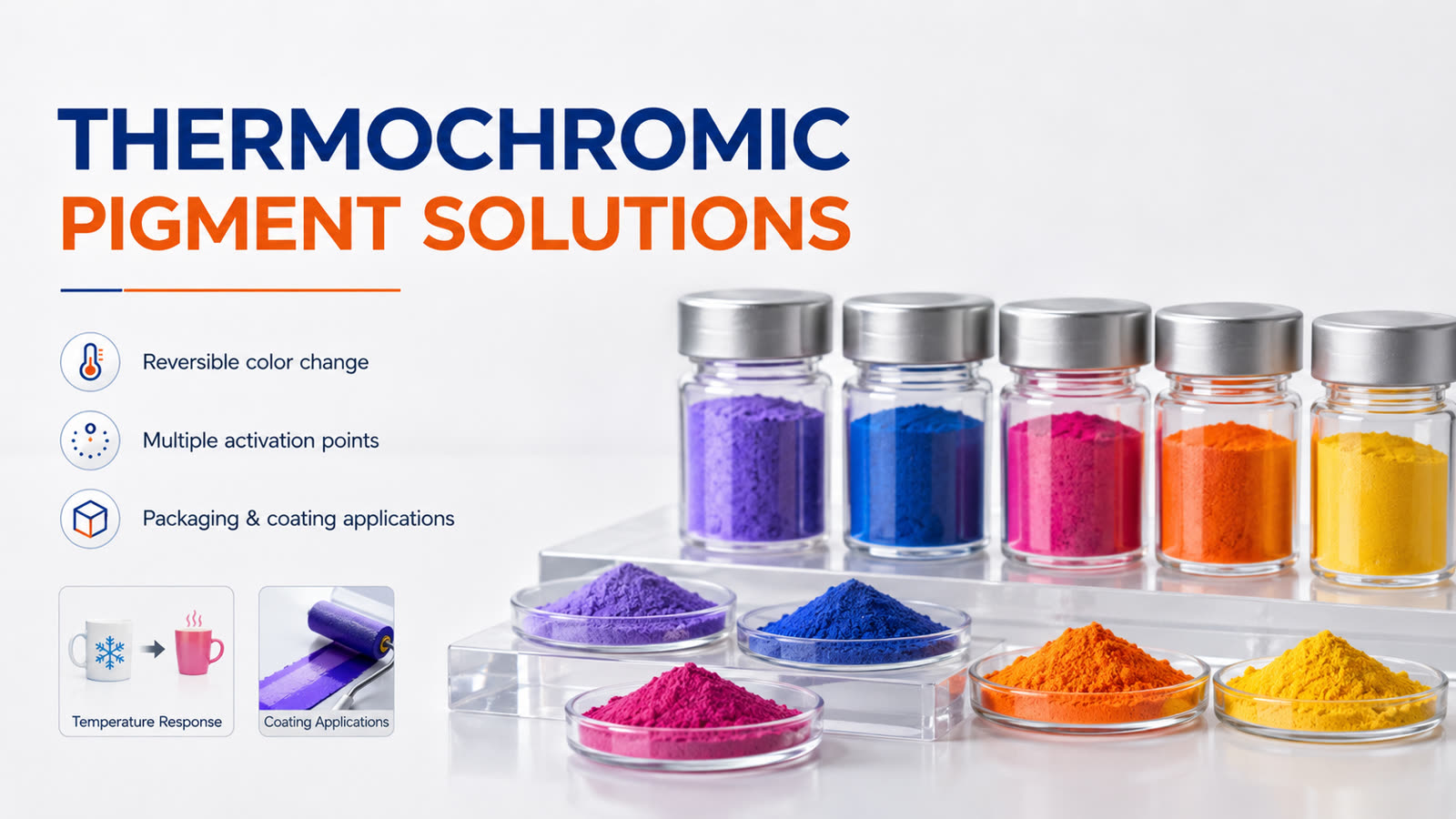
iSuoChem focuses on pigment chemistry as its core product line. The thermochromic range covers reversible leuco-dye microcapsule pigments in multiple base colors and standard activation temperatures such as 11 °C, 22 °C, 31 °C, and 43 °C, with custom points available. In the same catalog, buyers can also request mica powder, glitter powder, pearlescent pigment, and glow pigment, which makes it easier to design multi-effect labels or coatings without switching suppliers. Product references, activation curves, and application notes are published on https://www.ispigment.com/.
Practical checklist for buyers this year
|
Trend
|
Buyer action
|
Supplier signal to look for
|
|
Cold-chain indicators
|
Test at real logistic temperature swings
|
Documented drift after 500 cycles
|
|
Premium packaging
|
Ask for Delta E between batches
|
Batch reports and retained samples
|
|
Industrial coatings
|
Confirm heat resistance vs. process
|
Data at 180–230 °C short exposure
|
|
Anti-counterfeiting
|
Combine with mica or glow pigment
|
One-window supply of pigments
|
FAQ
Q: Is thermochromic pigment still a niche product?
A: It is a specialty pigment, but demand is broader than a decade ago. Packaging, safety indication, and industrial warning coatings all pull regular volume today.
Q: Are prices expected to fall in 2026?
A: Standard shades from mature Chinese suppliers are relatively stable. Prices for very low or very high activation points, and for high-cycle fatigue grades, remain higher.
Q: How do brand owners avoid failed launches?
A: Test the pigment inside the real ink, coating, or plastic system, under the real processing conditions, before locking down the artwork.
Q: Which iSuoChem website should be linked?
A: Use https://www.ispigment.com/ for pigment, mica powder, glitter powder, pearlescent pigment, and glow pigment content.
For the current thermochromic pigment portfolio and technical documents, visit https://www.ispigment.com/.


 web@ispigment.com
 +86 13965049124
 한국의
한국의  English
 français
 русский
 italiano
 español
 português
 العربية
 ไทย
ไทย Tiếng Việt